Evgeny Lebedev, then the owner of Independent, said, “The newspaper industry is changing, and that change is driven by readers. They are showing us. that the future is digital.”

Evgeny Lebedev, then the owner of Independent, said, “The newspaper industry is changing, and that change is driven by readers. They are showing us. that the future is digital.”
It literally just brings me the translator. Please just look at the flow. It’s a long sentence.) What’s the future of political cartoons?When asked whether the French Revolution was successful in the 1970s, Mao replied, “It is too early to judge.” The same answer can be given to the online revolution, which has dramatically changed the way political cartoons are viewed. Will the Internet finally kill printed newspapers and lead to the end of political cartoons? Well, of course that’s too early. As we know, predicting the future, especially predicting progress, is almost impossible in the field of technology. However, many people agree that political cartoons can decline at the end of the year, as the newspaper hosts them. In the United States, these dystopian futures are already almost there.Due to declining circulation and declining advertising revenues, there are only a few staff cartoonists employed by American newspapers compared to 300 employed on a paid basis in the 1980s. American cartoonist and columnist Ted Roll said cartoonists are like “canaries in coal mines” in the newspaper industry. Most American cartoonists are freelancers or syndicates of their work now, but it’s hard to earn a living in this way. Peter Preston, a former editor of The Observer, summed it all up briefly almost a decade ago.”At one point, they spearheaded a private attack and received a big salary and a big prize. But now the Internet has been cutting them down at the speed of two stars a month. Pulitzer in the bag has no effect on occupational mortality here. Someone draws the final line with their favorite deal. Political cartoonists are an endangered species…Until very recently, printed cartoons on leaders or commentary pages (sometimes on the front) were badges that distinguished themselves from editors of everywhere, especially the American Mordin estate, Herbrock. And Gary Trudeau, but look at how the terms of trade change. On the surface, curls look like another crappy crunch. We have to cut back on staff,” he said.
It literally just brings me the translator. Please just look at the flow. It’s a long sentence.) What’s the future of political cartoons?When asked whether the French Revolution was successful in the 1970s, Mao replied, “It is too early to judge.” The same answer can be given to the online revolution, which has dramatically changed the way political cartoons are viewed. Will the Internet finally kill printed newspapers and lead to the end of political cartoons? Well, of course that’s too early. As we know, predicting the future, especially predicting progress, is almost impossible in the field of technology. However, many people agree that political cartoons can decline at the end of the year, as the newspaper hosts them. In the United States, these dystopian futures are already almost there.Due to declining circulation and declining advertising revenues, there are only a few staff cartoonists employed by American newspapers compared to 300 employed on a paid basis in the 1980s. American cartoonist and columnist Ted Roll said cartoonists are like “canaries in coal mines” in the newspaper industry. Most American cartoonists are freelancers or syndicates of their work now, but it’s hard to earn a living in this way. Peter Preston, a former editor of The Observer, summed it all up briefly almost a decade ago.”At one point, they spearheaded a private attack and received a big salary and a big prize. But now the Internet has been cutting them down at the speed of two stars a month. Pulitzer in the bag has no effect on occupational mortality here. Someone draws the final line with their favorite deal. Political cartoonists are an endangered species…Until very recently, printed cartoons on leaders or commentary pages (sometimes on the front) were badges that distinguished themselves from editors of everywhere, especially the American Mordin estate, Herbrock. And Gary Trudeau, but look at how the terms of trade change. On the surface, curls look like another crappy crunch. We have to cut back on staff,” he said.

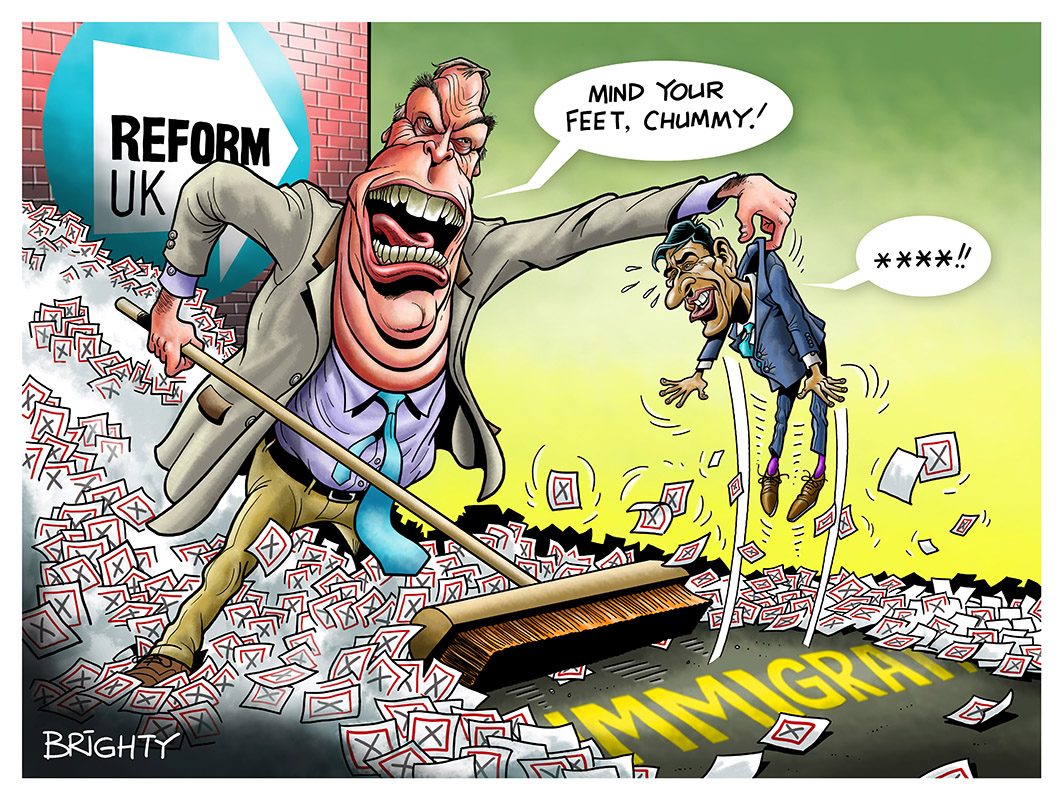
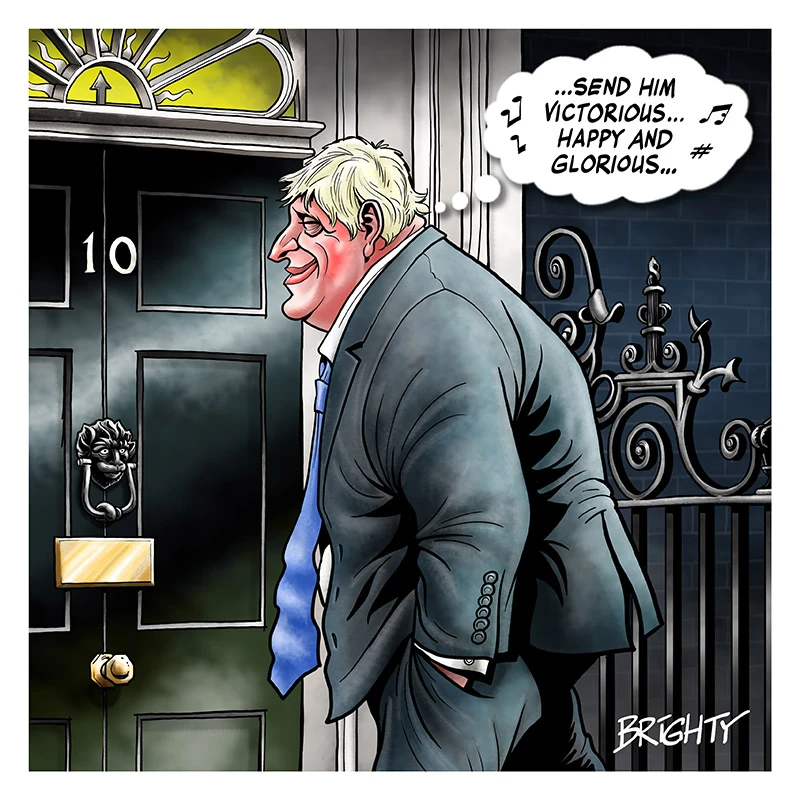
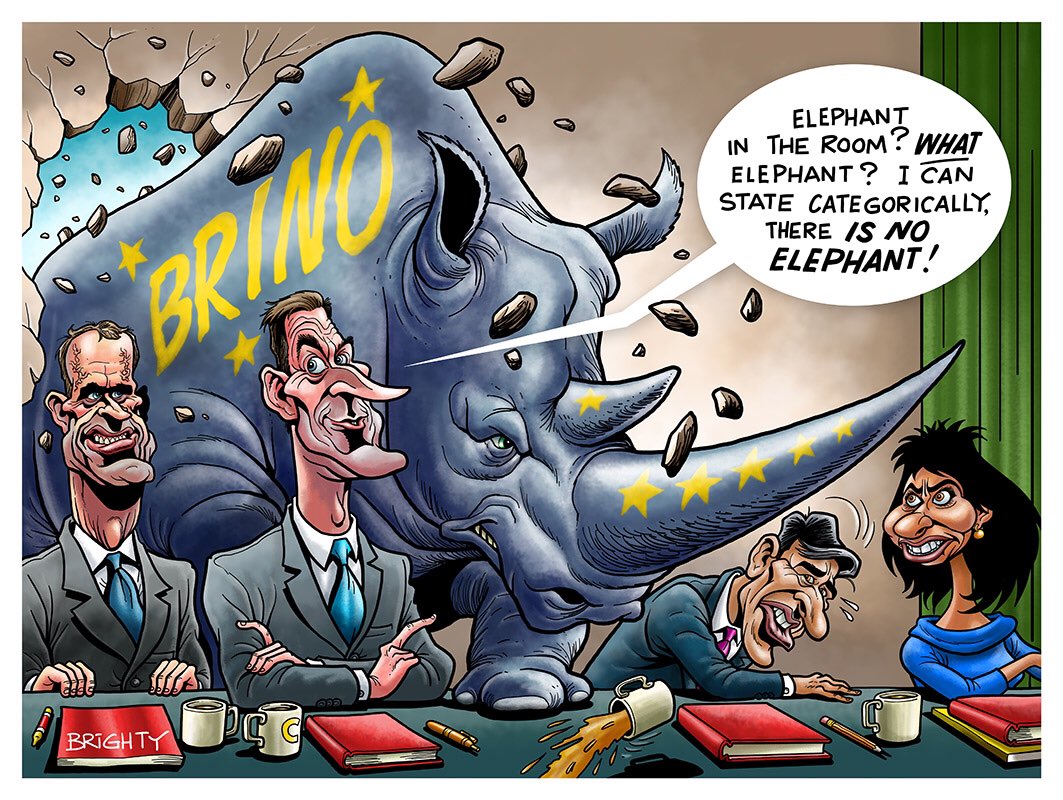
Steve Bright “Brighty” works completely digitally.The biggest advantage of computer work is that it is easy to modify some or all of the drawings. If an editor wants to omit or change something from a cartoon at the last minute, it’s not that hard to accept compared to a cartoon badly rendered on paper. If you make a mistake on the screen, you can press “Control Z” to go back and correct it. While using pens, ink, and watercolors, you may need to start the big picture from the beginning with a single mistake. Ralph Steadman emphasizes that he will never modify his work. However, there is no mistake. It’s just an opportunity to do something else.” Despite Steadman’s unconstrained perspective, Patrick Blower and Steve Bright appreciate that digital work is paramount. Save a lot of time, especially when modifying and changing. But for people like Steadman, who argue that digital work is a little artificial as a result and is less valuable than traditional comic books, Blower is not only angry but also dismissive of that view.”The biggest reason I draw political cartoons digitally is because they are twice as fast as ink and watercolors. Moreover, it seems perfectly logical. As more and more readers can see their output on the backlit digital screen, why don’t they generate images on the medium in which the images are consumed? If fewer newspaper readers still prefer print editions, the majority forget the means of production in less than a few seconds to read comics. They simply demand that cartoons explain the main points well and clarify them. It’s true that there is a group of (small) cartoonists who are more interested in promoting the creation of “analogs” than digital because they make a living by trading original cartoons by looking at the quality of ink and watercolors. Among certain cartoonists is the snob of Ancien Regime, as if waving a brush with a real pen point is more valuable about digital drawing. Good luck. Digitized images are not better or worse, they are just different. Another big advantage of digital drawing is that it can generate layers. This allows you to separate many elements of the drawing from each other, including the color of the linework and the background of the foreground figure. For example, if I draw a detailed crowd scene, I can use layers to configure the drawing to my liking. With detailed roughs, you don’t have to plan everything in advance, and as soon as you have an idea, you move and add it. In some cases, you draw pictures in papers claiming the right to edit what you do, but inevitably you are often asked to adjust your work.Many cartoonists such as Christian Adams, Ben Jennings and Brian Adcock have found a middle way to think that they have both worlds advantages. What they do to make cartoons is to draw a preliminary sketch with a pencil on paper and overlay the line work with ink. The final configuration is scanned on a computer that can digitally add colors, shadows, shades, and other effects. Ben Jennings explains how and why he works this way.”I still traditionally hand-drawn all the lines on paper. Then scan the diagram on your computer and use Photoshop to specify the color. A variety of brush sets are installed here, and there are handmade textures that allow you to play (or run out of time) until it is finished. With Wacom Cintiq, which allows me to draw pictures directly on the screen, I maintain the feeling of hand-drawn while doing digital work. While studying illustration at university, I often worked in black and white. So when I was first asked to make a FULL COLOR private cartoon, I had to use color to find my voice. I started by hand-drawing with ink and then applying it to the top of the line, and as a result, I often felt the result of washing away the line work. After that, I started playing by integrating digital technology into my work, and it started to be much easier to add colors. This not only allows you to draw behind the line, but also changes the color during the work and sometimes makes it suitable for the whole.And if the customer has a caveat, it can be much easier to fix. I also thought this would help develop a unique “style” by combining the traditional exaggerated aesthetics of satirical cartoons with more modern illustration techniques. This is, of course, a process in progress…” For example, change the color and sometimes change the configuration that you think is appropriate for the whole thing. It is also much easier to make corrections if the customer has precautions. Brian Adcock’s experience is similar to Ben’s. According to his testimony, cartoonists who work this way do not seem confident in their ability to use watercolors, guash or acrylic. Adcock explains why:I prefer drawing with pen and ink to drawing directly on the computer for several reasons. There’s something about the relationship between artists and paper that doesn’t exist on the digital surface. It’s natural. You make mistakes and there is randomness caused by the tools you use, the surface texture of the paper, the type and condition of your pen tip, and the type of ink you use. It’s absolutely fun to create something like this, and not in the real world like the digital world, but in a way that doesn’t feel like me. However, technology is developing so fast that you will soon be able to experience drawing pens on paper with digital technology. So please don’t tell me. I’ve never really developed a relationship with watercolors, ink or anything else, and paper-like coloring, because a more linear type of artist coloring is not a big problem for me. When I started working professionally as a cartoonist, I did most of the work that newspapers wanted. This means that as I was already used to editing black and white comics in Photoshop, when publications started using more and more colors, it seemed natural and easy to move from digital to color comics. I like to use paint and ink, but I’m looking for time constraints to produce political cartoons that require too much time to color in traditional ways because I don’t have much experience. The digital coloring experience means you can create tasks faster and edit them as easily as you need them. And if you have as much sex as I do, it’s useful. Twenty years ago, I wasn’t very interested in computer-generated colors because they looked too flat and artificial. I always wanted my work to look like that of another cartoonist, and to look more like a picture, so I created a coloring style that imitates the watercolor style more. Digital art and coloring have evolved exponentially, and artists like Ben Jennings have shown that digitally rendered comics can have depth, soul and ball, but I think it has changed now: ‘Bob Moran has created cartoons in this intermediate way, but he has gained experience and confidence in his abilities and decided to return to more traditional ways. Interestingly, as a result, his coloring not only brought his cartoons to life, but also actually improved the quality of his drawings. Moran explains the reason for the change as follows:”When I started working in the national newspaper, I drew manga by hand and photoshopped it. At the time, I told myself and others that it was modern and progressive, a way to bring political cartoons to the 21st century. In fact, he was not confident in using colors and was worried that he might miss the deadline. I quickly realized that I wasn’t happy with the results, and I became increasingly frustrated that the drawer was filled with uncolored ink paintings. Gradually, I started learning how to paint properly with watercolors and switched to making everything obsolete. I could concentrate more on themes and ideas because I couldn’t be more distracted by my dissatisfaction with how my manga looked. I still use my computer to make some adjustments at the end of the day. I always adjust the color balance a little, darken the black, and adjust the white color. I sometimes play with letters to make it as clear as possible. But ultimately, the finished work on my drawing board ends with paper. There is something very satisfying about that. For both print and online, modern newspapers are full of clean composition, clear photos and glossy digital rendering graphics. Most editorial illustrations are now made digitally. Therefore, manga completely handwritten with ink-stained and colored paint stands out. It’s a complete contrast to everything around you. I think it becomes more and more important as journalism develops.” Naturally, those who refuse to introduce new technologies tend to be those who started drawing daily cartoons long before the digital age came. There are times when old dogs cannot be taught new tricks, but unlike “semiconductors,” it is no coincidence that people who still use traditional methods find it most comfortable to continue doing so. According to Peter Brooks: “Painting on paper I think is real. I believe that part of all these new digital technologies have been successfully introduced into my career. Personally, I am most comfortable with the most familiar work tools: pens and brushes. car for me

政治漫画の未来は何ですか?what’s the future to political cartoons? 毛沢東主席は1970年代にフランス革命が成功したのかという質問に「まだ判断が早い」と答えた。 The same is true of online & # 12307;Prediction on revolution would that tell us a view of political cartoons have made dramatic strides www. and CEO of Eyetouch Reality : Do’s With ” localhost – hydroxyethyl (Kalafina album). com

What is the future of political cartoons?What is the future of political cartoons? When asked whether the French Revolution was successful in the 1970s, Mao replied, “It’s too early to judge.” The same is true of the online revolution, which dramatically changes the way we look at political cartoons. www.original-political-cartoon.com

What is the future of political cartoons?What is the future of political cartoons? When asked whether the French Revolution was successful in the 1970s, Mao replied, “It’s too early to judge.” The same is true of the online revolution, which dramatically changes the way we look at political cartoons. www.original-political-cartoon.com